Dominion Atlantic Railway Digital Preservation Initiative - Wiki
Use of this site is subject to our Terms & Conditions.
Difference between revisions of "DAR2552"
Dan Conlin (talk | contribs) (early photo appearances) |
Dan Conlin (talk | contribs) |
||
| Line 12: | Line 12: | ||
*CPR Class: [[:category:G2s|G2s]] | *CPR Class: [[:category:G2s|G2s]] | ||
| − | Built by the [[:Category:CPR Angus Shops|Canadian Pacific's Angus Shops]] in 1909, No. 2552 served on another CPR subsidiary, the Montreal and Atlantic and was listed as such in 1927.<ref>C.P.R., ''[[19410101-MP14|M.P. 14 Motive Power Roster, 1941]]'', p 15.</ref> No. 2552 was the first 4-6-2 Pacific to serve on the DAR and was the heaviest locomotive to operate on the line when it arrived in October 1936.<ref>"Heavy Engines Arrive for D. A. Railway", [[:Category:Advertiser|''Kentville Advertiser'']], Oct. 15, 1936, page 1</ref> Anticipating 2552's arrival with subsequent larger locomotives to permit heavier and faster trains, the DAR upgraded bridges, tracks and engine houses along its mainline to accommodate the larger locomotives. As the first large locomotive to arrive on the DAR, it was featured in [[Marguerite Woodworth]]'s [[History of the Dominion Atlantic Railway]] in 1936 and led the noted "Five Loco Lineup" photo portrait by Edson Graham in May 1927. No. 2552 it was lettered for the Dominion Atlantic and given the name "Haliburton" along with a cast brass name plate in July 1937.<ref>[[Bishop, George|George Bishop]], "Railway Notes", [[:Category:Advertiser|''Kentville Advertiser'']], July 22, 1937</ref> No. 2552 was officially transferred to the DAR in 1937, first showing up as D.A.R unit on M.P. 14 1938 and listed as a D.A.R. unit way through to 1950.<ref>C.P.R., ''[[:Category:MP14FORMS|M.P. 14 Motive Power Rosters]]'', 1927, p. 33; 1938, p. 19; 1944, p. 15, 1947, p. 15; 1950, 1952, p. 14; 1952, p. 14; 1955, p. 15</ref> The locomotive reverted to CPR lettering in World War Two, but photographs indicate that it again received a DAR lettering and herald between 1949 and 1950. By 1948, photographs indicated that it had received a new tender with curved sides. From 1952 to 1955 No. 2552 was still listed but as a C.P.R. unit in the M.P. 14s. It was scrapped in July 1956.<ref>[[Omer Lavallée]], ''[[Canadian Pacific Steam Locomotives]]'', p. 311, 348, 352.</ref> | + | Built by the [[:Category:CPR Angus Shops|Canadian Pacific's Angus Shops]] in 1909, No. 2552 served on another CPR subsidiary, the Montreal and Atlantic and was listed as such in 1927.<ref>C.P.R., ''[[19410101-MP14|M.P. 14 Motive Power Roster, 1941]]'', p 15.</ref> No. 2552 was the first 4-6-2 Pacific to serve on the DAR and was the heaviest locomotive to operate on the line when it arrived in October 1936.<ref>"Heavy Engines Arrive for D. A. Railway", [[:Category:Advertiser|''Kentville Advertiser'']], Oct. 15, 1936, page 1</ref> Anticipating 2552's arrival with subsequent larger locomotives to permit heavier and faster trains, the DAR upgraded bridges, tracks and engine houses along its mainline to accommodate the larger locomotives. As the first large locomotive to arrive on the DAR, it was featured in [[Marguerite Woodworth]]'s [[History of the Dominion Atlantic Railway]] in 1936 and led the noted "Five Loco Lineup" photo portrait by [[:Category:Edson Graham Photo|Edson Graham]] in May 1927. No. 2552 it was lettered for the Dominion Atlantic and given the name "Haliburton" along with a cast brass name plate in July 1937.<ref>[[Bishop, George|George Bishop]], "Railway Notes", [[:Category:Advertiser|''Kentville Advertiser'']], July 22, 1937</ref> No. 2552 was officially transferred to the DAR in 1937, first showing up as D.A.R unit on M.P. 14 1938 and listed as a D.A.R. unit way through to 1950.<ref>C.P.R., ''[[:Category:MP14FORMS|M.P. 14 Motive Power Rosters]]'', 1927, p. 33; 1938, p. 19; 1944, p. 15, 1947, p. 15; 1950, 1952, p. 14; 1952, p. 14; 1955, p. 15</ref> The locomotive reverted to CPR lettering in World War Two, but photographs indicate that it again received a DAR lettering and herald between 1949 and 1950. By 1948, photographs indicated that it had received a new tender with curved sides. From 1952 to 1955 No. 2552 was still listed but as a C.P.R. unit in the M.P. 14s. It was scrapped in July 1956.<ref>[[Omer Lavallée]], ''[[Canadian Pacific Steam Locomotives]]'', p. 311, 348, 352.</ref> |
Name Origin: Thomas Chandler Haliburton, noted Nova Scotian writer of the 19th century and [[Windsor]] resident, author of ''Sam Slick'' novels and provincial history. Earlier used by [[DAR0037|DAR No. 37]]. | Name Origin: Thomas Chandler Haliburton, noted Nova Scotian writer of the 19th century and [[Windsor]] resident, author of ''Sam Slick'' novels and provincial history. Earlier used by [[DAR0037|DAR No. 37]]. | ||
Revision as of 15:25, 30 November 2025
Dominion Atlantic Railway Steam Locomotive No. 2552 "Haliburton"
No. 2552 was the first Pacific class locomotive to arrive on the DAR and marked the arrival of heavier power for the DAR. Her long service on the line from 1936 to 1956 and attractive paint schemes attracted considerable photographic attention.
Built Canadian Pacific's Angus Shops, Montreal in March 1909.
- Wheel Arrangement: 4-6-2 (Pacific)
- 22.5" x 28" cylinders
- 70" drivers.
- 64' 6" wheelbase length
- 75' 8" over couplers
- Weight: 237,000 lbs loaded; 219,000 lbs light; 155,000 lbs on drivers[1]
- CPR Class: G2s
Built by the Canadian Pacific's Angus Shops in 1909, No. 2552 served on another CPR subsidiary, the Montreal and Atlantic and was listed as such in 1927.[2] No. 2552 was the first 4-6-2 Pacific to serve on the DAR and was the heaviest locomotive to operate on the line when it arrived in October 1936.[3] Anticipating 2552's arrival with subsequent larger locomotives to permit heavier and faster trains, the DAR upgraded bridges, tracks and engine houses along its mainline to accommodate the larger locomotives. As the first large locomotive to arrive on the DAR, it was featured in Marguerite Woodworth's History of the Dominion Atlantic Railway in 1936 and led the noted "Five Loco Lineup" photo portrait by Edson Graham in May 1927. No. 2552 it was lettered for the Dominion Atlantic and given the name "Haliburton" along with a cast brass name plate in July 1937.[4] No. 2552 was officially transferred to the DAR in 1937, first showing up as D.A.R unit on M.P. 14 1938 and listed as a D.A.R. unit way through to 1950.[5] The locomotive reverted to CPR lettering in World War Two, but photographs indicate that it again received a DAR lettering and herald between 1949 and 1950. By 1948, photographs indicated that it had received a new tender with curved sides. From 1952 to 1955 No. 2552 was still listed but as a C.P.R. unit in the M.P. 14s. It was scrapped in July 1956.[6]
Name Origin: Thomas Chandler Haliburton, noted Nova Scotian writer of the 19th century and Windsor resident, author of Sam Slick novels and provincial history. Earlier used by DAR No. 37.
Operational Appearances
Gallery
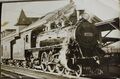
Locomotive No. 2552 at the Kentville Station, newly arrived Nov. 1936.
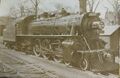
Locomotive No. 2552 posed at Kentville, April 1937.
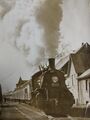
Locomotive No. 2552 leaving Kentville with passenger train, Kentville Station in background and P. R. Ritcey warehouses to right, April 1937.
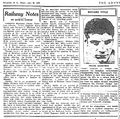
Article on naming and DAR colours for No. 2552 by George Bishop, The Advertiser, Kentville, July 22, 1937.
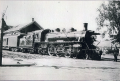
No. 2552 at Kentville leading Train No. 98 on Sept.10, 1937. Mail car is most likely No. 3713.
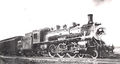
DAR locomotive No. 2552 at Truro, December 1, 1938.
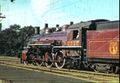
DAR No. 2552 "Haliburton" leaving Halifax station, still from motion picture, 1939.
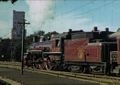
DAR Locomotive 2552 in Halifax in 1939.
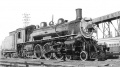
Haliburton, No. 2552 at Halifax in July of 1939.
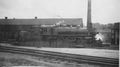
Locomotive No. 2552 on the Kentville Turntable with the Machine Shop and the Boiler Plant in background, circa 1942.
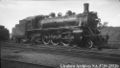
Locomotive No. 2552, Kentville, Nova Scotia, ca. 1943.
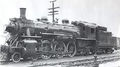
DAR Locomotive 2552 at Truro, undated.
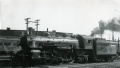
No. 2552 at the Truro Roundhouse on June 22, 1944.
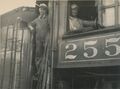
Believed to be locomotive 2552 with Earl McLeod and possibly James D. Smith, circa 1945.
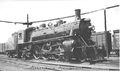
Locomotive 2552 at an unknown location.
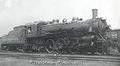
DAR locomotive No. 2552 at Truro, July 17, 1948.
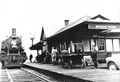
Bridgetown Station and locomotive No. 2552 with an eastbound train, 1949.
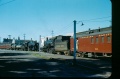
No. 1040 and Train No. 96 meets Train No. 95 led by No. 2552 with mail car No. 3713 at Windsor, August 1949.
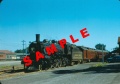
Yarmouth mail Train No. 95 at Windsor Station in Windsor led by No. 2552 in August 1949.
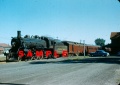
Yarmouth mail Train No. 95 at Windsor Station in Windsor led by No. 2552 in August 1949.
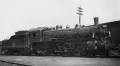
At Truro, May 5, 1950.
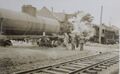
Locomotive No. 2552 and tank car in a minor mishap at Yarmouth, Aug. 8, 1950.
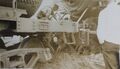
Detail of Locomotive No. 2552 and tank car in a minor mishap at Yarmouth, Aug. 8, 1950.
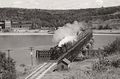
Train No. 95 pulled by Locomotive No. 2552 crossing the Bear River Bridge with the ruins of the Clarke Brothers Pulp Mill to right, circa 1950.


Other Known Photographs of this locomotive
- Canada Science and Technology Museum, Ottawa, Photo No. STR18269a
- Two photos of locomotive on page 53, "A Dominion Atlantic Sojourn." Locomotive Quarterly, Spring 1998., Halifax photo by Kenneth S. MacDonald and Truro photo collection of Kenneth S. MacDonald.
References and Footnotes
- ↑ Omer Lavallée, Canadian Pacific Steam Locomotives, p. 399
- ↑ C.P.R., M.P. 14 Motive Power Roster, 1941, p 15.
- ↑ "Heavy Engines Arrive for D. A. Railway", Kentville Advertiser, Oct. 15, 1936, page 1
- ↑ George Bishop, "Railway Notes", Kentville Advertiser, July 22, 1937
- ↑ C.P.R., M.P. 14 Motive Power Rosters, 1927, p. 33; 1938, p. 19; 1944, p. 15, 1947, p. 15; 1950, 1952, p. 14; 1952, p. 14; 1955, p. 15
- ↑ Omer Lavallée, Canadian Pacific Steam Locomotives, p. 311, 348, 352.
